
What Is Specialty Coffee, Really? And Why It’s More Than a Score
Specialty coffee is a term that appears everywhere today. On café menus. On packaging. On Instagram captions. Often alongside words like traceable, single origin, or ethically sourced.
But what does specialty coffee actually mean? And why does it matter?
At its core, specialty coffee is an attempt to treat coffee not as a generic commodity, but as an agricultural product with character, origin, and value beyond volume.
That idea sounds simple. In practice, it is anything but.
From Commodity to Specialty
For most of its modern history, coffee has been traded as a commodity. Large volumes, standardized quality, and pricing driven by global markets rather than taste or origin.
In that system, coffee is blended to be consistent, defects are hidden through roasting, and producers are paid primarily for quantity, not quality.
Specialty coffee emerged as a response to this model. Instead of asking “How much coffee can we move?”, specialty coffee began asking “How good can this coffee be, and why?”
That shift brought attention back to elements that had long been overlooked: variety, altitude, processing, freshness, and the people behind the coffee.
How Specialty Coffee Is Traditionally Graded
To make quality measurable and tradable, the specialty coffee industry introduced formal grading systems.
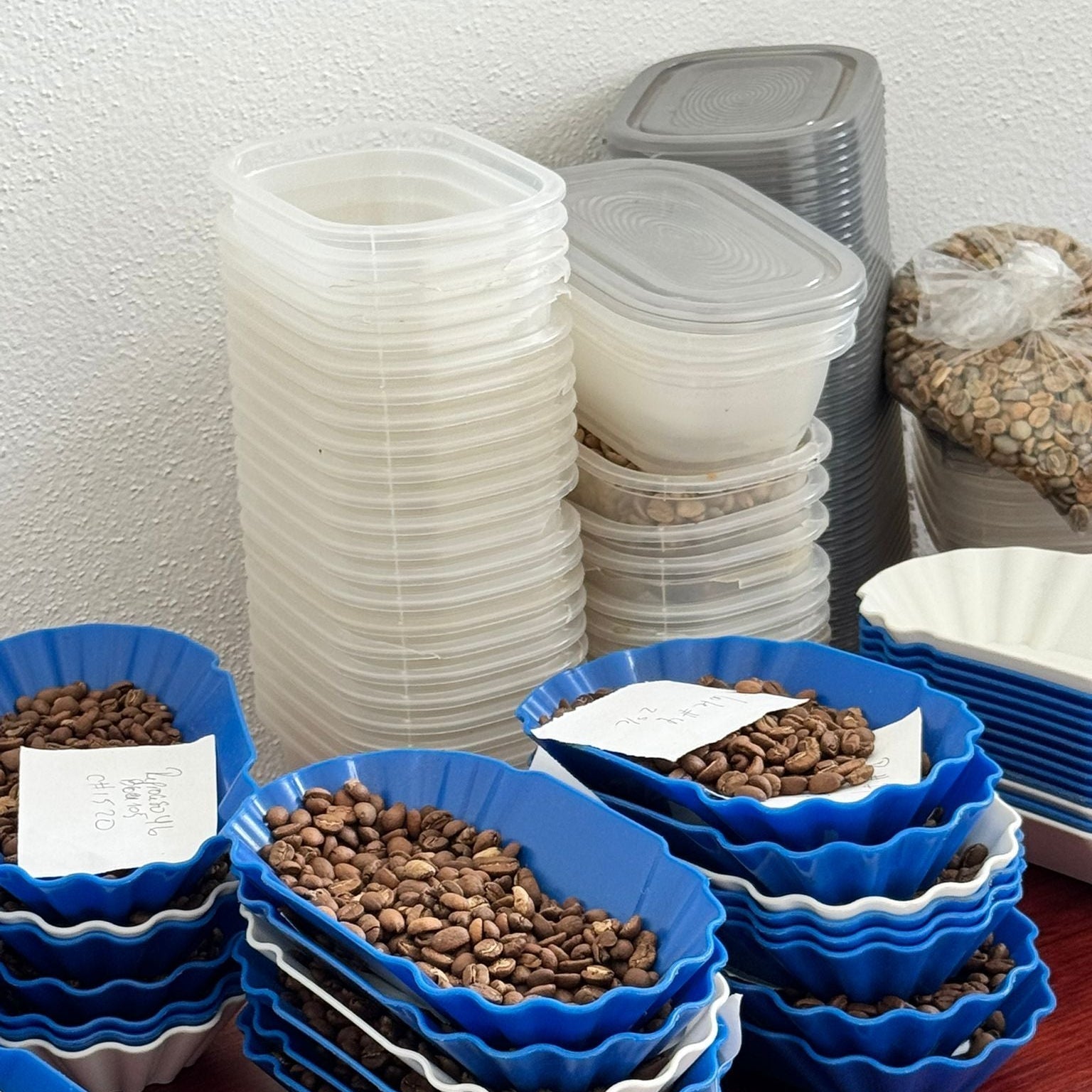
The most widely used framework comes from the Specialty Coffee Association. Coffees are evaluated through cupping and scored on a 100-point scale, based on attributes such as aroma, flavor, acidity, body, balance, and the absence of defects.
In simple terms:
-
Coffee scoring below 80 points is considered commercial coffee
-
Coffee scoring 80 points and above is considered specialty coffee
This system plays an important role. It creates a shared language around quality, helps identify defects, and allows producers, buyers, and roasters to compare coffees more objectively.
Taste matters here. And it still does. But this system was never meant to explain everything.
Why a Score Alone Is Not the Full Picture
A single number can never fully describe a coffee.
Scores are influenced by calibration, tasting context, and personal perception. Two trained cuppers can taste the same coffee and experience it differently. A coffee that performs exceptionally well on a cupping table may behave very differently when roasted for espresso or brewed in a café.
There is also a structural risk. When scores become the goal rather than the tool, coffees can be pushed toward profiles that score well, even if they are difficult to roast consistently, unstable over time, or poorly suited to real-world use.
This does not make scoring wrong. It simply highlights its limits. Specialty coffee is richer than a number. Reducing it to a score alone flattens its complexity.
An Industry Shift: From Scoring to Value
As specialty coffee has matured, these limitations have become harder to ignore.
In response, the industry has started to broaden how quality is understood. One example of this shift is the Coffee Value Assessment (CVA), which expands the conversation beyond a single sensory score.
Rather than replacing tasting or dismissing scores, CVA separates evaluation into different dimensions. It looks at sensory experience alongside physical quality, descriptive flavor information, intended use, and the type of value a coffee creates in real contexts.
The underlying question changes. Instead of only asking “How high does this coffee score?”, the conversation becomes “What kind of value does this coffee create, and for whom?”
This approach reflects something many professionals already know intuitively: a coffee’s value depends on how it is used, experienced, and shared, not only on how it performs in a controlled tasting environment.
Why Quality Is More Than a Number
It is important to be clear about this. Scoring still matters. Taste still matters. Sensory evaluation remains a fundamental tool in specialty coffee.
At the same time, value is not one-dimensional.
A clean, balanced coffee that scores in the mid-80s but performs beautifully as espresso, delights customers, and supports long-term relationships may create more real-world value than a higher-scoring coffee that is difficult to roast, inconsistent to serve, or hard to understand.
This is the tension specialty coffee lives with today. Balancing measurable quality with real-world experience. Numbers help, but they do not tell the whole story.
When quality is reduced to a single number, important details disappear. When value is seen more broadly, better questions can be asked. Questions about sustainability, consistency, how a coffee is actually used, and how people work together across the seed to sip journey.
Learning to hold both perspectives is not a compromise. It is part of how specialty coffee continues to evolve.
What Specialty Coffee Represents Today
Specialty coffee is not perfect. It is still evolving. It still struggles with accessibility, pricing, and communication.
But at its best, specialty coffee represents a mindset. It values quality over volume. Transparency over anonymity. Context over abstraction. It accepts that coffee is seasonal, complex, and deeply human, and tries to respect that complexity rather than hide it.
Specialty coffee is not about finding the perfect score. It is about paying attention. And attention, applied thoughtfully, can change how coffee is grown, traded, and enjoyed.
Martin Buhl
Founder, ROS Specialty Coffee
Read more

Born from German-Nicaraguan roots and summers on our family farms, ROS Specialty Coffee is my return to origin and my mission to share truly traceable coffee.
Discover how coffee moves from seed to sip and why coffee supply chains are under pressure. A thoughtful look at farming, roasting, demand, and coordination.